Thank you for Subscribing to Eldercare Review Weekly Brief
 Katharine Ross, President
What challenges do families face when navigating fragmented senior care decision environments today?
For many families, the search for senior care begins in uncertainty, within a fragmented and high-pressure decision environment, where information is abundant but rarely structured, and choices carry long-term consequences. An adult child may be navigating care for a parent alongside work and family responsibilities, while an older adult plans the next stage of life, weighing independence against support. The challenge is not a lack of options, but a lack of clarity.
How does a structured platform help users evaluate senior care options more effectively?
This is where SeniorsGuide.com has built its relevance. It is not just a place to browse listings but a structured decision-navigation platform designed to help users evaluate choices through defined pathways, assessment-led guidance and direct access to vetted providers.
The Seniors Guide website serves older adults exploring their own journeys as well as families supporting them. The real difference lies in how closely the platform’s content and guidance reflect the realities people are navigating, with content created by caregivers and individuals with lived experience. Every interaction is designed to reduce confusion and build trust, making the process feel more manageable at every step.
Seniors Guide connects families searching for answers with providers delivering care, acting as a selective filter that does not list every provider but curates based on reviews, ethical standards and leadership quality. At a time when many platforms focus on scale and lead generation, it operates as a trust-led alternative, avoiding lead resale and eliminating intermediary-driven engagement models.
 A Foundation Built on Caregiving
The story of Seniors Guide began in the 1990s, when its founders were seeking care for a loved one and realized how difficult it was to access reliable information. What began as a print publication grew steadily, expanding its reach and evolving as information consumption habits changed.
Today, SeniorsGuide.com operates as a nationwide digital platform with a growing footprint across the U.S., currently spanning 36 states with plans to expand to all 50 states. Yet growth has not diluted its purpose. The caregiver-led origin continues to foster empathy that cannot be manufactured and ensures the platform remains grounded in real experiences rather than abstract assumptions. “We recognize that we have to serve the families doing research, either for themselves or for people they love, for care and housing. And we also have to be of good service to the providers that we partner with,” says Katharine Ross, president.
This balance is not easy to maintain, yet it defines the organization’s identity. By understanding both sides of the equation, Seniors Guide creates a more aligned and efficient interaction between user intent and provider capability. Rather than just matching users with providers, it structures how those decisions are made.
Trust As the Cornerstone
Why is trust critical when selecting providers and information sources in senior care decisions?
Trust is the currency that underpins every positive interaction in senior care. Without it, even the most advanced tools or extensive databases lose their value. Seniors Guide treats trust as a long-term commitment, reflected in how the platform is built and how it serves its users.
“Trust is earned very slowly, and it can erode overnight if you lose it,” explains Ross. That understanding shapes how the platform is built from the ground up.
A clear separation exists between editorial and commercial functions. The content team remains entirely focused on serving the audience, offering practical, relevant guidance that is often candid. Such independence allows the platform to publish information that may not always align with commercial interests but consistently serves the reader’s needs.
We recognize that we have to serve the families doing research, either for themselves or for people they love, for care and housing. And we also have to be of good service to the providers that we partner with.
Transparency further reinforces trust. Users can clearly distinguish between informational content and provider listings, leaving no ambiguity about what is being presented and why. This clarity reduces decision friction and increases user confidence.
A strong human element adds another layer of credibility. Many contributors draw from firsthand caregiving experiences, bringing depth and perspective to their work. Their insights move beyond surface-level information and reflect the emotional and practical realities of aging decisions, creating a sense of authenticity that resonates deeply with readers.
Over time, these elements have helped Seniors Guide build lasting relationships with its audience. Families return for information and reassurance that they are on the right path, without being funneled through lead-capture systems or required to exchange personal data for access.
-
We are shifting from just presenting options to guiding informed decision-making.
In what way does guided content architecture reduce complexity across different aging stages?
Choosing senior care has become increasingly complex, with options ranging from aging in place to assisted living, memory care and specialized services. The challenge is no longer access to information but structuring that information into usable decisions.
Seniors Guide structures this journey through a three-tier content architecture that covers active living, supportive care and high-acuity needs. Instead of overwhelming users with choices, it organizes information into clear pathways that reflect different stages of aging. Each pathway is supported by content and resources tailored to specific needs, with results localized by geography to ensure relevance.
Such an approach reduces decision fatigue and allows users to focus on what is most relevant to them, creating a more intuitive experience where information flows naturally based on user intent rather than forcing them to search for connections. This replaces fragmented search behavior with guided progression across decision stages.

“We are shifting from just presenting options to guiding informed decision-making,” adds Ross. This shift represents a transition from information access to decision enablement, supported by tools such as structured decision guides and contextual content journeys.
Redefining the Narrative Around Aging
Aging is often framed in narrow terms that focus on decline and dependency. Seniors Guide acknowledges that life after 65 is less about limitations and more about evolving needs, interests and aspirations.
The SeniorsGuide.com content strategy reflects this perspective. It covers topics ranging from wellness and nutrition to relationships, travel and lifestyle. The breadth of information acknowledges that older adults continue to seek engagement, connection and purpose.
The platform also serves multiple audiences simultaneously. It speaks to seniors exploring their own options and to adult children navigating decisions on behalf of their parents. Each group has distinct needs and perspectives, and content is designed to address both.
By taking an inclusive approach, the articles reshape how aging is discussed, shifting the focus beyond care needs toward progression, adaptability and quality of life outcomes. Seniors Guide further challenges misconceptions about senior living communities by highlighting outcomes such as social connection and overall well-being.
Balancing Integrity with Growth
As Seniors Guide expands its reach, it reaffirms its commitment to core values and approaches growth with a clear sense of responsibility. keeps its core values front and center and upholds a clear sense of responsibility. While the platform continues to enter new markets, the team’s focus is on maintaining a consistent quality of experience.
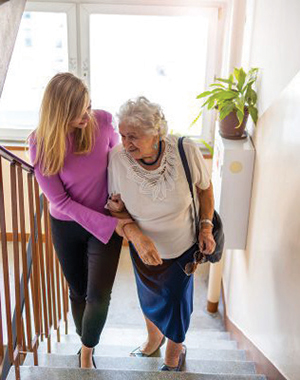 The company also curates provider partnerships carefully. The platform prioritizes organizations that demonstrate strong values and a genuine commitment to serving seniors. To safeguard user experience, the platform steers clear of unnecessary data collection and intrusive tactics. It makes information easy to access and allows users to explore at their own pace.
Ross emphasizes this philosophy: “We want people to know when they are navigating our site, they are in a trusted, ethical place of research.”
This commitment to user control ensures that these decisions remain deeply personal and are guided by the user’s needs rather than external pressures.
Setting a New Standard in Senior Care
The journey to finding the right senior care solution is rarely straightforward. It brings together emotional decisions, financial considerations and shifting family dynamics, often all at once. SeniorsGuide.com brings structure to this process through defined pathways, localized results and direct access to carefully selected providers.
What began as an information resource has grown into something far more meaningful.
The company’s growth tells one part of the story, but the real measure lies in the impact it has had on the families it serves. By staying grounded in its caregiver-led origins while adapting to changing needs, the platform continues to raise the standard for how older adults and their families navigate and support aging journeys.
That is what defines its standing today and what makes the recognition as the Senior Living Care Service of the Year 2026 feel like a result of consistent execution, trust-led design and a clearly differentiated model.
Guiding Informed Senior Living Decisions in a Complex Market
Senior living care services have entered a period of heightened complexity. Executives responsible for sourcing and positioning care solutions face a landscape defined by expanding service models, shifting consumer expectations and intense scrutiny around trust. Families can now choose between aging in place with layered home care, active adult communities, assisted living, memory care, skilled nursing and short-term respite. Choice has grown, yet clarity has not. Decision fatigue is common, and misalignment between marketing claims and lived experience erodes confidence quickly.
In this environment, credible senior living care services must do more than present options. They must frame information in a way that reflects the emotional weight of the decision while preserving user control. Families require distinct pathways that mirror real-life transitions: independent retirement, supportive services as mobility changes and higher-acuity care when medical needs increase. Information architecture should separate these stages clearly, reduce irrelevant noise and localize results so that families see viable solutions within their own geography rather than a national blur of possibilities.
Trust remains the central differentiator. It is built slowly through consistent editorial discipline and transparent commercial boundaries. Senior care decision-makers evaluating marketing or referral partners should examine whether the platform maintains a visible separation between content and paid profiles. Clear labeling of promoted listings, limited intrusive data capture and restrained use of pop-ups signal respect for the user’s autonomy. Platforms that treat older adults and caregivers as informed participants rather than data sources tend to retain long-term credibility.
Content depth also matters. Aging is not a single transaction but a progression that spans lifestyle, wellness, nutrition, mobility, relationships and social engagement. Services that acknowledge this breadth are better positioned to guide families before crisis moments arise. An editorial strategy that addresses curiosity and dignity across age segments, from newly retired adults to adult children confronting urgent memory care questions, indicates a sustained understanding of the audience. Decision-support tools that pair educational material with guided assessments further narrow options based on stated needs, shifting the experience from passive browsing to informed evaluation.
Executives should also weigh whether a partner works selectively with providers. Broad aggregation can inflate volume, yet it often dilutes quality control. Platforms that curate listings based on ethical standards, review performance and alignment with resident-centered values demonstrate a willingness to balance commercial interests with advocacy. Engagement analytics, profile performance benchmarks and narrative guidance for providers can replace opaque aggregator fees with more predictable subscription models, creating budget stability while improving storytelling accuracy.
Seniors Guide™ illustrates this approach. Founded in the 1990s by caregivers who struggled to locate information for a family member, it evolved from a regional publication into a nationwide digital platform active in 36 states. Its structure separates active living, assisted and supportive services and higher-acuity care, delivering location-based results and tailored content within each path. It maintains a defined editorial wall; labels promoted profiles clearly and limit aggressive data capture, reinforcing user control. Decision guides and assessment tools align stated needs with relevant providers, while subscription-based partnerships offer providers a predictable alternative to aggregator dependence. For executives evaluating senior living care service partners, Seniors Guide represents a disciplined, trust-centered model that supports both families and responsible providers.
...Read more
Senior Living Care Services Info
Q1
What Do Senior Living Care Services Help Families Understand?
Senior Living Care Services help families make sense of housing, support and care choices that often arrive during emotionally charged transitions. The category is not limited to finding a facility; it also includes education, comparison tools, local provider visibility and guidance that helps people move from uncertainty to informed evaluation. Strong resources explain levels of care, clarify terminology, surface practical questions around independence and support, and reduce the burden of sorting through scattered information.
Q2
How Does Seniors Guide Support Senior Living Care Services Decisions?
Seniors Guide supports Senior Living Care Services through a structured decision-navigation platform rather than a simple listing model. It helps older adults and family members evaluate options through defined pathways, assessment-led guidance and access to vetted providers. Its content is shaped by caregivers and people with lived experience, giving the platform a practical perspective on the questions families face while researching care and housing. It also avoids lead resale and positions itself as a trust-led alternative to intermediary-heavy referral models.
Q3
What Should Users Look For in a Senior Care Guidance Platform?
A useful platform for Senior Living Care Services should make choices easier to compare without pushing users into rushed decisions. Clear organization, localized results, transparent provider information and decision-support tools all matter. Users should also look for signs that educational content is distinct from commercial placement, because senior care research requires confidence that information is presented for clarity rather than pressure. The most useful experiences support exploration at the user’s pace.
Q4
Why Does Trust Matter in Senior Care Research?
Trust is central to Senior Living Care Services because families are often evaluating care during periods of stress, limited time and high personal stakes. Reliable guidance should respect user control, explain options plainly and avoid intrusive data practices. When users can distinguish informational content from provider listings, they are better positioned to compare care choices with confidence and preserve dignity throughout the decision process. Trust also helps reduce hesitation when families need to act carefully but decisively.
Q5
How Does Seniors Guide Organize Complex Aging Journeys?
Seniors Guide organizes Senior Living Care Services around different stages of aging instead of treating every visitor as having the same need. Its platform uses pathways for active living, supportive care and higher-acuity needs, with geography-based results that keep searches relevant. The company grew from a 1990s print publication into a nationwide digital platform active in 36 states, while keeping its caregiver-led origin central to its approach. That structure helps convert broad research into more focused next steps.
Q6
How Can Care Guidance Improve Outcomes for Families and Providers?
Effective Senior Living Care Services create value by aligning user intent with appropriate provider capability. Families gain a clearer path through care options, while responsible providers can present services in context rather than compete only for visibility. The strongest models combine educational depth, ethical provider curation, transparent engagement and practical tools that support informed decision-making before families reach a crisis point.
Company :
Seniors Guide™
Management Katharine Ross, President
Description
Seniors Guide™ is a comprehensive online platform that helps older adults and families navigate senior living, caregiving and aging decisions through trusted articles, planning tools and a nationwide directory of care providers.