Thank you for Subscribing to Eldercare Review Weekly Brief
For Legacy Hospice Cares, hospice has never been only about managing symptoms. It has always been about understanding the whole person behind the diagnosis.
Serving communities that range from rural areas to metropolitan regions, Legacy Hospice Cares works with individuals from many different backgrounds. Some patients have spent years regularly seeing physicians, while others may have had very little interaction with the healthcare system. The organization cares for older adults as well as younger individuals facing serious illnesses, recognizing that every person’s experience with end-of-life care is different.
That understanding has shaped the way Legacy Hospice Cares operates. The company does not approach hospice through a standard formula. Instead, it begins by learning who each patient is, what matters to them, and what kind of support will make their journey more comfortable.
For Karin Johnson, CEO of Legacy Hospice Cares, the purpose of hospice is deeply personal. Her perspective has been shaped by decades in healthcare and by personal experiences that reinforced the importance of empathy when families receive difficult news. Today, that perspective influences how the organization approaches every patient and family interaction.
“Everything is patient centered,” Johnson says, describing the foundation of Legacy Hospice Cares’ philosophy.
That philosophy is reflected in the organization’s everyday decisions. Rather than focusing only on medical needs, the company considers emotional, spiritual, social, and personal factors that influence a patient’s quality of life. Complementary therapies further support this whole-person approach, helping address comfort, emotional well-being, and individual preferences alongside clinical care. By integrating these services into the broader care plan, Legacy Hospice Cares seeks to support the whole patient and provide families with a more comprehensive, compassionate hospice experience.
Care That Looks Beyond Traditional Hospice
One of the areas where Legacy Hospice Cares stands apart is its use of complementary therapies alongside traditional hospice services. The organization combines clinical care with additional support options designed to improve comfort and emotional well-being.
Patients may receive services such as music therapy, art therapy, pet therapy, massage therapy, healing touch, and other complementary approaches when appropriate. These therapies are not viewed as replacements for medical care but as additional tools that help address the many dimensions of a person’s experience.
Legacy Hospice Cares believes that end-of-life care involves more than controlling physical symptoms. A patient may also be dealing with fear, loneliness, unresolved emotions, spiritual questions, or the desire to reconnect with meaningful parts of their life.
The organization’s team evaluates each patient individually to determine what combination of services may provide the greatest benefit. Clinical assessments, psychosocial evaluations, and spiritual assessments all contribute to creating a care plan that reflects the patient’s needs and preferences.
Communication remains central throughout that process. The team works with patients and families to determine what support they want and what will be most meaningful for their situation.
A Circle Instead of a Hierarchy
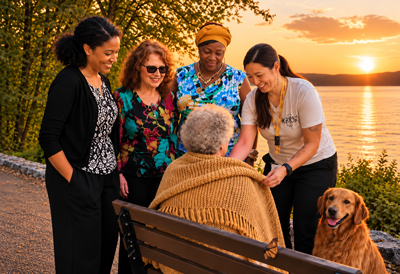
Healthcare organizations often rely on structured hierarchies, but Legacy Hospice Cares has developed a different approach. The company views its care model as a circle, with the patient and family at the center and every team member contributing to the overall picture.
This approach brings together nurses, physicians, social workers, chaplains, volunteers, caregivers, and complementary therapy specialists. It also includes family members, facility partners, and community organizations involved in supporting the patient.
 Johnson believes that families bring knowledge that cannot be replaced by medical expertise alone. They understand the patient’s history, personality, preferences, and values in ways that healthcare providers cannot always know.
“We have to believe regardless, that family knows this patient better than us, and what they bring to the table is invaluable,” Johnson explains.
The company’s interdisciplinary approach allows team members to share observations and adjust care plans as circumstances change. A caregiver may notice a change in a patient’s mood, a nurse may identify a medical concern, or a social worker may recognize emotional challenges affecting the family. Each piece of information contributes to a more complete understanding of what the patient needs.
Supporting Families through Uncertain Moments
For many families, entering hospice care can be an emotional and overwhelming experience. Legacy Hospice Cares focuses on making that transition easier by building relationships early and providing clear information.
The organization’s support often begins before a patient officially becomes part of hospice care. Through community education and conversations with families, the team helps people understand what hospice involves and what options are available.
The admissions process is designed to answer questions and address concerns. Families receive guidance about clinical decisions, available services, and what they can expect throughout the journey.
Legacy Hospice Cares also recognizes that family members experience their own emotional challenges. Sometimes loved ones become so focused on caregiving responsibilities that they struggle to process what is happening around them. The organization’s social workers and bereavement team help families recognize their own needs while continuing to support their loved one.
-
We have to believe regardless, that family knows this patient better than us, and what they bring to the table is invaluable.
This support does not end after a patient passes away. The company continues to stay connected with families through calls, messages, and other forms of outreach, understanding that grief unfolds differently for everyone.
Helping Patients Leave Something Meaningful Behind
A significant part of Legacy Hospice Cares’ work involves helping patients create memories and preserve pieces of their personal stories. The organization refers to these efforts as legacy projects.
These projects often begin with simple questions: What matters to this person? What experiences shaped their life? What do they want their family to remember?
Team members listen carefully because important wishes are not always expressed directly. A patient may mention missing a loved one, wanting to revisit a special place, or hoping to complete something unfinished. Those details can become opportunities to create meaningful experiences.
One memorable example involved a patient who wanted to return to Wisconsin after spending time away from home. With no close family support available, Legacy Hospice Cares worked with community partners to help make the transition possible. The team arranged support, helped coordinate housing, and welcomed the patient back to the area.
The patient had a few final wishes: to visit a family farm, pet a cow, and go fishing. Legacy Hospice Cares helped make those moments happen.
For the organization, stories like this represent the true purpose of hospice. It is not always about dramatic gestures. Often, it is about paying attention to what matters to one person and finding a way to honor it.
Building the Future of Hospice Care
As the healthcare industry continues to change, Legacy Hospice Cares believes hospice providers must continue to focus on accountability, education, and quality care. The organization recognizes that maintaining public trust requires strong standards and a commitment to doing what is right for patients and families.
Looking ahead, Legacy Hospice Cares hopes to expand its role within the communities it serves. The company is developing programs focused on veterans, including efforts to better understand how different military experiences influence the needs of those receiving hospice care.
The organization also wants to be known as more than a healthcare provider. Its vision is to become a stronger community resource through education, partnerships, and outreach.
Legacy Hospice Cares’ growth has been built on a simple idea: people facing serious illness deserve to be treated as individuals, not cases. By combining medical expertise with human connection, the organization continues to create a hospice experience centered on dignity, understanding, and meaningful support.
At the heart of Legacy Hospice Cares is a belief that caring for people at the end of life is a responsibility shared by an entire community. Through every conversation, every care plan, and every moment of support, the organization continues working toward a more personal approach to hospice care.
Company :
Legacy Hospice Cares
Management Karin Johnson, CEO
Description
Legacy Hospice Cares provides compassionate, personalized hospice services centered on dignity, comfort, and meaningful connections. Through clinical expertise, complementary therapies, and a collaborative care model, the organization supports patients and families with holistic guidance throughout their end-of-life journey.