

Thank you for Subscribing to Eldercare Review Weekly Brief

Amber Grove
Where Care Follows Human Footsteps
A resident in memory care sits at the piano and plays the opening notes to Moon River by ear. As her fingers wander, the tune drifts toward a gospel progression and into Beethoven. While the room softens around her, dinner service waits until the last note fades. This subtle yet meaningful moment captures the organizing principle of Amber Grove: life is led by the person, not the program. Here, the day follows the person, not the clock, and care begins by honoring who someone is—their capabilities, preferences, quirks, and history—so that dignity and compassion is felt rather than promised. Staff bends to the resident’s established habits, not vice versa. A late sleeper is not forced into an eight o’clock breakfast, because this elder care community believes that the person sleeping soundly has earned slow mornings over a lifetime. Such a stance is not framed as benevolence. It is codified as policy. Amber Grove reinforces identity by design, whether a beach-scene door cover for someone who lived near the water or a patriotic symbol for a veteran. The door says, “This is mine,” reducing cognitive friction and increasing calm. Shared spaces are arranged like family rooms rather than waiting areas, and outdoors are treated as extensions of daily life, places for conversations, fresh air, and the kind of unstructured time that makes a day feel like a day, not a shift block. The result is an atmosphere that reads as home to residents and families alike, a feeling reinforced by the staff’s habit of calling people by name, following individual routines, and letting relationships, not rules, set the tone. Both memory care and personal care are run on a single premise: dignity and autonomy are enacted in small, daily decisions. That is why a resident can sleep late without missing a meal and why activities can be as spontaneous as an UNO tournament championship or as steady as a piano session that brings out long-held memories. The intent is to generate compassion, safety, and a sense of belonging in a warm, homelike environment. Trust before Tasks At Amber Grove, the care team has adopted a simple operating truth: before asking a resident to accept a bath or take medication, first earn trust. Training emphasizes relationships beyond task lists; caregivers learn residents’ life stories, preferences, and triggers, so that personal care is accepted rather than resisted, a shift that lowers anxiety and makes each interaction more effective. This human component spans med techs, caregivers, dietary staff, housekeeping, and the business office, all aligned around personalized care. Spaces are designed to support that trust work, be it private rooms for privacy and control, cozy commons for safe social time, or accessible outdoor areas to diffuse restlessness and restore equilibrium. This is not sentiment but sound practice in memory care, where every day begins with uncertainty and requires precise knowledge of the person in view. The operating lens draws from Montessori methods, favoring choice, familiar hands-on activities, and environments that adapt to a person’s abilities and interests. The outcome is predictable: fewer episodes of agitation and more moments of connection. The discipline is simple: get the relationship right, and the tasks follow. “It is not our schedule, it is their schedule,” says vice president of operations Dr. Lisa Lee-Myers, capturing how Amber Grove treats time as a resident right, not an operational constraint. The phrase resonates because it is backed by practice, visible from breakfast to bedtime and repeated at each point where care could be forced but is instead offered. Welcoming the Complex The clearest test of a caregiving philosophy is who is welcomed when others say no. Amber Grove’s intake process is deliberately inclusive, particularly for people living with dementia that some communities decline, such as frontotemporal dementia, where behaviors can be more complex. The stance is explicit; complexity does not disqualify someone from equal love, care, and treatment; it calls for careful review and a team decision about fit, placement, and support.
Senior Home Care Services

The Perspective of a Passionate Care Provider
Laura Silverstein, RN, BSN, WCC, CDP, Administrator/Director of Patient Service, True Care Home Care
Retirement Communities

Value-Based Care in Today's Health Care Environment
Carl Brodarick, Senior Vice President Hospice Development, AccentCare
Independent Living

Nurturing Senior Care with Technology
David Chandler, VP of Clinical Services and Business Development, Senior Helpers
Dementia Care

Embracing Innovations in Elder Care
Theresa Redling, Medical Director, Saint Barnabas Medical Center
Home Care

Transforming Senior Care: A Journey of Leadership and Innovation
Amanda Chriswell, President, Legato Living Residential Memory Care
Senior Home Care Services

Transforming Senior Living Through Digital Marketing And Innovation
Carlene Motto, Chief Marketing Officer, Belmont Village Senior Living
Assisted Living

Outpacing Care Challenges by Building Strong Operational Systems
Tanika Marable, Director of Assisted Living and Memory Care, Lifespace Communities, Inc
Home Care

Meeting the Needs of Today's seniors
Victor Rios, Director of Resident Services, Senior Lifestyle
Senior Food Service
How Do you Build a Dream Team with Technology?
Olivia Jenkins, Corporate Director of Clinical Services, Navion Senior Living
IN MY OPINION
Home Care
Reimagining Resident Services through innovation and Connection
Beth Grigg, Senior Director of Resident Services, LCS

LAST WORD
Independent Living
Pioneering Holistic Elder Care: Good Samaritan Societys Strategic Vision for Enhanced Quality of Life
Joseph (Joey) Caster, Director of Senior Living, Good Samaritan Society
IN FOCUS

Assisted Living's Shift to Individualized Care
Assisted living communities provide personalized care through tailored plans, enhancing residents' independence, dignity, and health by addressing unique needs and preferences.

Assisted Living as a Recession-Resistant Asset Class
The assisted living sector is thriving due to an aging population, shifting family structures, and rising demand for specialized care, making it a resilient investment opportunity.
EDITORIAL
Building Compassionate Elder Living Spaces of the Future
Demographics across the globe are shifting toward an aging population driven by rising life expectancy. At the same time, the evolving expectations of seniors and their families are reshaping what aging with dignity truly means. Subsequently, senior assisted living is moving toward enriched environments that promote independence, emotional wellbeing and personalized support.
On the tech front, modern assisted living communities are leveraging AI-enabled health monitoring, wearable devices and remote care platforms to continuously track vitals, medication adherence, activity patterns and early signs of medical decline. Personalized meal-planning systems now account for dietary restrictions and medical conditions, while medication systems ensure adherence and reduce risk. In memory care units, AIpowered behavioral tracking combined with sensory therapies and curated environment design is helping residents with dementia experience greater comfort and calm.
The industry’s rapid modernization highlights that senior living is no longer only about providing support, but about enabling autonomy and belonging. As families place increasing importance on safety and transparency in high-touch care, the leaders in senior assisted living stand out by blending cutting-edge technology with skilled staff trained in caregiving with empathy.
This edition of ElderCare Review highlights the forerunners setting new standards in senior assisted living. It features thought leadership articles from industry experts, including Joseph Caster, director of senior living at Good Samaritan Society. He showcases strategies to deliver holistic, person-centered elder care focused on active spiritual and emotional support. Beth Grigg, senior director of resident services at LCS, reimagines elder care with thoughtful use of AI and innovative wellness programs to help seniors thrive in assisted living spaces.
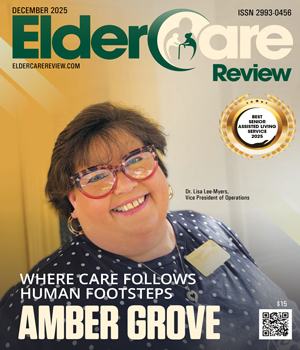
The cover features Amber Grove, a senior living community offering personal care and specialized memory care in a warm, homelike environment centered on resident preferences and trust-based caregiving.
We hope this edition gives you clear insights into how integrated technology and compassionate care are shaping a future in which seniors are empowered to live life with confidence, comfort and dignity.
