



Thank you for Subscribing to Eldercare Review Weekly Brief
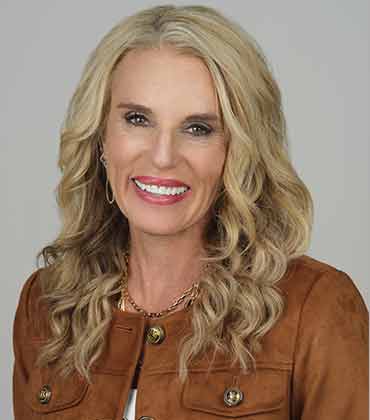 Kris Carter, CEO
For more than four decades, Kris Carter knew what it meant to care for someone she loved. When she was 14, her youngest sister was born with Costello syndrome, an extraordinarily rare genetic disorder. Only about 300 people had been born with the condition, and Carter’s sister was the oldest person living with Costello syndrome in the United States.
Carter became a caregiver at a very young age, long before she would go on to lead Aspire Home Health and Hospice alongside Wendi Snell, its director of nursing. That experience shaped not only her career, but also her understanding of what happens to families when someone they love becomes seriously ill. Being a caregiver, Carter learned, is very different from being a healthcare professional.
“One can be a highly experienced nurse, a physician or someone who knows very little about healthcare,” Carter says. “But when it is their loved one who needs care, the experience changes. Decisions become more emotional.”
That understanding became part of the foundation of Aspire. There is a chair in the company’s office known simply as the “Patient and Family Chair.” It serves as a reminder that every decision should consider the people on the other side of the care plan. Aspire’s employees are also reminded that when they enter a patient’s home, they are guests, often arriving during one of the most vulnerable periods in a family’s life.
That philosophy has helped shape what Aspire calls the Perfect Visit, a detailed model designed to create a consistent standard of care regardless of which member of the team walks through the patient’s door.
The Perfect Visit begins before a clinician ever enters the home. Employees are trained on how they dress, where they park, the condition of their vehicle, whether they have the necessary equipment and whether they arrive prepared with an understanding of the patient’s care plan.
Once inside, the focus begins with the patient and family. Clinicians establish eye-level contact, remember important details from previous visits and ask a fundamental question before moving through the clinical priorities of the visit: What is your biggest concern right now?
From there, the clinician moves through hands-on care, medication and supply checks, patient and family education, communication with physicians when needed and bedside documentation. Before leaving, the clinician helps the patient and family understand what happens next and communicates important information to the rest of the care team.
Aspire calls it a Perfect Visit because Carter believes excellence should not depend on whether a patient happens to receive an exceptional individual clinician.
Home-based healthcare is more like a relay. Responsibility continually passes from one person to another. A strong system helps ensure that important information, expectations and standards travel with the patient from one member of the care team to the next.
Aspire invests heavily in making that standard teachable. New employees begin learning the process through Aspire’s System 7 training program. They use visual cues to remember each stage of the visit and are tested on whether they can reproduce the process logically.
Training then moves into a dedicated lab with a simulated vehicle, bedside setup and examples of challenging home environments. Clinicians are filmed performing the Perfect Visit and then critique their own performance before being observed in an actual patient’s home. The training does not end after orientation. Everyone, including Carter, is recertified annually.
-
One can be a highly experienced nurse, a physician or someone who knows very little about healthcare. But when it is their loved one who needs care, the experience changes. Decisions become more emotional.
The same attention to consistency extends to clinical outcomes. Aspire provides ongoing education to clinicians on preventing avoidable hospitalizations, including medication reconciliation, disease education, patient and family instruction and following through on the plan of care.
But a care plan is not meant to remain static. Patients change. Their conditions change. Their abilities change. Their goals change.
Aspire’s philosophy is Right Care at the Right Time, which means the care plan must continue to reflect what the patient needs now, not simply what the patient needed when services began. In both home health and hospice, plans of care are regularly reviewed and adjusted as patients’ conditions, needs and goals change.
Families remain part of that process. For a home health patient recovering after an illness, injury or surgery, the conversation may focus on regaining strength, managing medications safely or becoming independent enough to remain at home.
For a hospice patient, the goals may shift toward symptom management, comfort, dignity and helping the family understand what to expect as the disease progresses. The type of care may change, but the philosophy does not: the right care, at the right time, based on what matters to the patient and family. The impact of that coordination can sometimes be best understood through the words of families themselves.
After his mother’s hospice experience, one son described Aspire’s nurse as a conductor. Different members of the care team entered at different moments, each with a role to play, while the nurse helped bring everything together. He described the result as ‘Ode to Joy.’ For Carter, that description captured what coordinated care should feel like to a family. The family should not have to conduct the healthcare system themselves.
Consistency also shapes the way Aspire supports its employees. At a time when staffing shortages continue to challenge healthcare organizations, Aspire focuses on clear expectations, extensive training and creating an environment where employees understand what excellent care looks like. Several employees have spent more than a decade with the organization.
Carter also believes the future of care at home will require healthcare organizations to find better ways to remain connected with patients and families between in-person visits.
Telecommunications may become an increasingly important part of that connection. Secure video conferencing and similar technologies can give clinicians another way to see and communicate with patients and families, answer questions and maintain meaningful contact when an inperson visit is not necessary or immediately available.
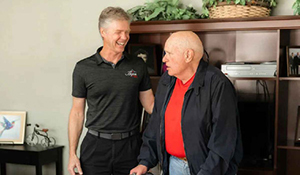 For Carter, however, technology should never be confused with care itself. Aspire is also exploring how AI can reduce the administrative burden on clinicians, including time spent documenting care, while emphasizing that AI has limitations.
Technology is a tool. The standard remains human. When someone opens the door of their home to a healthcare professional, Carter believes they should be able to trust that the person walking through it is prepared, that the people caring for them are communicating with one another and that the care they receive reflects what they need at that moment.
For Aspire, that is what ‘Right Care at the Right’ Time means. It is also what Carter’s years as a caregiver taught her long before she ever became a healthcare executive: behind every care plan is a person, and beside that person is often a family trying to make the best decisions they can for someone they love.
Company :
Aspire Home Health and Hospice
Management Kris Carter, CEO
Description
Aspire Home Health and Hospice provides Medicare-certified home health, hospice and palliative care focused on delivering the right care at the right time. Its Perfect Visit model and System 7 training program are designed to create consistent, coordinated and patient-centered care while helping patients and families navigate changing healthcare needs at home.
