

Thank you for Subscribing to Eldercare Review Weekly Brief

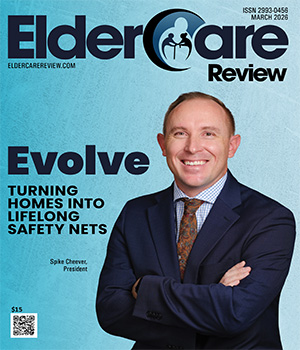
Evolve
Turning Homes into Lifelong Safety Nets
Home is where older adults feel safest, happiest and healthiest. But small details can work against them. A doorway that’s too narrow, a step that’s too high or a bathroom that’s no longer secure can turn a familiar space into a place of risk. Over time, these risks can quietly erode independence, pushing toward facility-based care sooner than necessary. Health plans, tasked with keeping members safe and independent, often cannot see these issues until it’s too late. Hidden home hazards rarely appear in claims until after an injury, leaving plans scrambling to respond without the infrastructure to manage construction-based solutions that fall outside their typical scope. Evolve turns home safety from a blind spot into a managed benefit. It aligns clinical judgment with construction execution, ensuring the proper home modifications are authorized, built correctly and delivered with accountability. Acting as a single point of contact between insurers, clinicians and contractors, Evolve manages each case end-to-end, helping older adults remain secure in the place they know best. How does Evolve convert clinically identified home risks into executed, accountable safety modifications? “Our focus is on improving safety and accessibility for older adults and people living with disabilities so they can stay in their homes as long as possible and avoid institutional care,” says Spike Cheever, president.
Home Care
When words fall short, care shows through quiet understanding and compassion. It’s more than just completing tasks. This was the reality for a devoted husband as he watched his nonverbal wife struggle to express her needs. Determined to ensure she received the best care, he turned to Southern California Caregiving. What followed was a team of compassionate caregivers who intuitively understood her unspoken needs. The impact was profound—she remained safe and never experienced a fall or hospitalization. Her family saw the difference and felt reassured. She radiated peace, and her calm demeanor and healthy glow reassured them she was truly cared for. That kind of personal, attentive service has been at the heart of this family-run company for over ten years. “We treat every client as our own,” says Maribeth Brigden, case manager. “For us, home care is more than just a service; it’s about family taking care of family.” This deeply personal approach is reflected in Southern California Caregiving’s expertise in dementia care, post-surgery recovery, and support for clients with ALS and multiple sclerosis. The team helps with daily personal care, meal preparation, medication reminders, grooming, and incontinence care—ensuring each client stays clean, well-fed, and on track with their health needs. But the care doesn’t stop there. The company leverages technology to make homes safer and caregiving smarter. Fall detection, medication monitoring, and early infection alerts help prevent emergencies before they happen. Clients enjoy peace of mind knowing their health is being watched over, not just with compassion, but with precision. Southern California adds an additional layer of care and convenience by combining safety services and smart technology. It ensures a comfortable and secure living environment through health monitoring, safety supervision and respite care, all supported by cutting-edge fall detection and health monitoring technology. This thoughtful intake process helps pair each client with the right caregiver, creating a seamless transition and a stronger bond from the start. This system also monitors medication adherence and picks up early signs of infection, allowing caregivers to intervene before a situation becomes critical. Team SoCal Caregiving integrates safety measures with personal care to minimize medication mishaps, prevent avoidable hospital visits and ensure continuous care at home.

Medicare

Turning 65 opens the door to Medicare, and a wave of questions comes with it. Which plan should I choose? Will my doctor be covered? What if I pick the wrong one? For millions of Americans approaching Medicare eligibility and retirement, navigating coverage options is one of the most confusing and consequential decisions they face. That’s where MySeniorHealthPlan.comsteps in. Founded on the belief that healthcare choices should empower, not overwhelm, MySeniorHealthPlan.com has been serving clients for 20 years at no cost. The company has helped thousands of seniors across the U.S. make confident, informed decisions about their Medicare coverage. With a team of licensed agents serving all 50 states and multilingual support in Spanish, Chinese, and other languages, it has built a strong reputation for trust, consistency, and results. “We exist to bring peace of mind to Medicare-eligible communities through trusted, ongoing guidance and human-centered support,” says Pete Blasi, president and CEO of MySeniorHealthPlan.com. “We’re not here to sell plans; we’re here to serve people.” MySeniorHealthPlan.com begins by addressing the unique needs of each client. Whether someone is new to Medicare or reviewing an existing plan, the process starts with a personalized consultation to understand their doctors, prescriptions, financial concerns, and lifestyle. Agents help explain Medicare’s complex rules and enrollment timelines, guiding individuals to plans that align with their goals and often discovering cost-saving opportunities that others miss. For example, the licensed insurance agents help Medicare beneficiaries understand every aspect of Medicare, from coverage and costs to enrollment timelines, eligibility requirements, what’s included, what’s not, and even the options available beyond traditional Medicare, like Medicare Advantage. This clarity often translates into a life-changing impact. MySeniorHealthPlan.com has helped clients reduce out-of-pocket expenses from hundreds of dollars a month to little or no premium costs just by identifying better options available in their region. In many cases, clients express profound gratitude for the support, often leaving 5-star reviews or calling the team simply to say thanks.
Medicaid
Mission and Approach Neuravention Inc. is dedicated to developing advanced therapies for neurovascular diseases, with a specific focus on creating safer, more efficient, and longer-lasting interventions for intracranial aneurysms. Its multidisciplinary teams, comprised of experts in research, engineering, and manufacturing, collaborate closely with clinicians to address real-world procedural challenges encountered in daily practice. Innovative Collaboration and Technology By combining adaptive design engineering with a deep understanding of clinical needs, Neuravention is driving meaningful advancements in the capabilities of current endovascular devices. This approach enables interventionalists to manage complex neurovascular cases with greater confidence and improved patient outcomes. Neuravention is a privately held medical device company based in Buffalo, Minnesota. It was founded in 2020 following years of design and research dating back to 2012, culminating in the introduction of the world’s first next-generation 4D conformable neuro coil system for intracranial aneurysm therapy across all aneurysm geometries. Market Opportunity and Industry Dynamics The global neurovascular intervention market is at a critical inflection point. The commoditization of first-generation endovascular technologies is converging with increasing demand for improved clinical outcomes and procedural efficiency. The global aneurysm coil market is currently valued at approximately USD 2.48 billion in 2025 and is projected to reach USD 4.57 billion by 2035, growing at a compound annual growth rate of 6.3 percent. When viewed within the broader neurovascular intervention landscape, including the rapid expansion of ischemic stroke thrombectomy, the total market opportunity increases significantly. Some forecasts project a compound annual growth rate of 10.0 percent through 2032, reaching nearly USD 8 billion. Neuravention Inc. enters this market not simply as another participant in the embolization coil space, but as a potential disruptor of the prevailing coil compaction paradigm. Through its proprietary CROWN G1 4D™ Embolic Coil System and the Barracuda™ Rapid Detachment System, the company addresses two of the most persistent unmet needs in aneurysm therapy: the high rate of long-term recurrence caused by inadequate packing density, and the procedural inefficiencies associated with legacy detachment mechanisms.

Independent Living

Pioneering Holistic Elder Care: Good Samaritan Societys Strategic Vision for Enhanced Quality of Life
Joseph (Joey) Caster, Director of Senior Living, Good Samaritan Society
Senior Food Service

Bridging Compassion and Innovation: Advancing Senior Care with Technology
Jacqueline Hodges, Director of Clinical Services, Franklin Park Senior Living
Geriatric care
How AI Is Helping Hospice Care
Charlotte Mather, MBA, RN, FACHE, Senior Vice President - Clinical Operations, AccentCare
Medicare Supplement

Comfort, Safety, and Skin Protection: How C-Matt™ and Casco Prevention Products Improve Daily Care
Melissa Mangold, President & Owner, Casco Manufacturing Solutions
Hospice Care

Enhancing Healthcare Accessibility through Telehealth
Benjamin Kummer, Director of Clinical Informatics in Neurology, Mount Sinai Health System

IN MY OPINION
Home Care
Transforming Senior Care: A Journey of Leadership and Innovation
Amanda Chriswell, President, Legato Living Residential Memory Care

LAST WORD
Senior Home Care Services
Aging with Dignity: Holistic Geriatrician-led Support for Seniors
Theresa Redling, Medical Director, Saint Barnabas Medical Center
IN FOCUS

Aging with Dignity: Modern Accessibility in Community Design
Modern accessibility services and inclusive design enable safer, smarter, and more independent environments, empowering older adults to age comfortably and actively.

Enabling Dignified Aging: The Shift to Integrated Home Care Models
Technology-enabled home services enhance elder care quality, reduce hospitalization costs and strengthen sustainable healthcare delivery models.
EDITORIAL
Turning Homes into Secure Care Environments
Senior safety and accessibility have moved from supportive considerations to core determinants of care quality, cost management and independence. As aging populations grow more clinically complex and payer models emphasize prevention, the ability to translate functional needs into structured safety interventions is becoming central to sustainable elder care delivery.
Recognized as Top Senior Safety and Accessibility Services 2026, Evolve demonstrates how home safety can be operationalized as a coordinated benefit rather than an episodic response. By aligning clinical evaluation with construction execution, the organization ensures that home and vehicle modifications such as doorway widening, ramp installations and assistive safety technologies are properly authorized, built and quality checked. Acting as a single point of contact among insurers, clinicians and contractors, Evolve manages each case end-to-end, reinforcing accountability across a vetted national provider network. Its cross-state experience and structured oversight model illustrate how aging in place initiatives can reduce risk exposure while preserving autonomy at scale.
Complementing this systems-driven approach, sector leaders continue to emphasize the foundational role of functional assessment and person-centered environments. Theresa Redling, Medical Director at Saint Barnabas Medical Center, underscores that evaluating Activities of Daily Living and Instrumental Activities of Daily Living is essential to determining appropriate care pathways, particularly amid a limited geriatric workforce. Joseph Caster, Director of Senior Living at Good Samaritan Society, highlights that safety must coexist with active aging, spiritual support and individualized engagement to sustain quality of life.
Together, these perspectives reinforce a clear directive for the industry. Senior safety must be clinically grounded, operationally disciplined and strategically integrated. We invite readers to explore this edition’s insights and examine how structured accessibility frameworks are shaping the next phase of elder care leadership.
