

Thank you for Subscribing to Eldercare Review Weekly Brief
The Newbury of Brookline
Curating Senior Living Around Evolving Lives
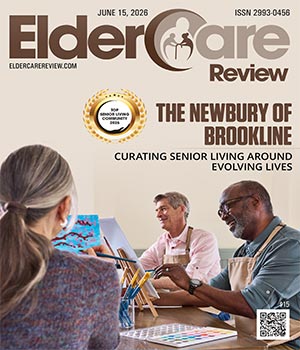
Senior living models are often built around fixed services and predefined levels of care. At The Newbury of Brookline, the operating logic starts from a different premise. Members continue evolving, so the community around them must evolve as well. Rather than delivering a static set of experiences, the model is structured around continuously assessing each member, understanding their history and preferences and adapting care, services and programming in response. As Kisco Senior Living’s first community in the Boston market, The Newbury of Brookline was designed to reflect both the character of Brookline and the expectations of members drawn to the area’s cultural and intellectual environment. Nestled within the historic Fisher Hill neighborhood, the community offers close proximity to Boston’s renowned medical institutions, universities, museums, dining and cultural destinations while maintaining the residential charm and walkable character that define Brookline itself. This approach influences everything from programming and dining to memory care and family involvement, creating a community where change is not occasional but embedded in daily operations. Frances Bates, General Manager, often speaks about that in practical terms. Members continue to evolve, she says, so the community surrounding them should continue to evolve too. Ongoing member input, both formal and informal, directly influences programming, services and experiences across the community. Some ideas emerge through structured feedback loops, while others begin in conversation and develop into lasting parts of the member experience. That input is not only used to shape experiences, but to adjust how care is delivered day to day. “We continue adjusting and recreating our programs as our members give us their thoughts and preferences,” says Bates.
Helping loved ones recover and return home is often the hope families carry when seeking senior care. One husband was searching for that kind of support for his 86-year-old wife, who could no longer manage on her own. She had stopped eating properly, was unable to bathe herself, and a bout of flu had rapidly worsened her condition. Watching her health decline, the husband hoped she would regain the strength needed to return home safely. How did Personal Care at Evergreen support the resident’s recovery journey? That’s when Personal Care at Evergreen stepped in to support her through physical therapy, occupational therapy, and rehabilitation services. With close attention from experienced caregivers, nurses, and support staff, her condition gradually improved. After four months, the woman recovered enough to return home to her husband, where she continues to live more than a year later. “We focus on personalized care delivered with compassion, supporting each resident to recover while meeting their needs in one consistent setting without transfers,” says Nicholas Hall, CEO. This approach reduces disruptions in care while helping residents maintain continuity in daily routines and ongoing support, easing stress for their families. What care services are included when resident needs change over time? The company designs each care plan around residents’ changing conditions rather than a fixed service pathway. Its care extends across medication support and rehabilitative services, including physical, occupational, and speech therapy. Residents receive assistance with everyday living needs like bathing, toileting, dressing, and laundry. Medical oversight is provided through scheduled visits by a physician and a registered nurse twice a week to monitor residents and adjust medications when needed. When health conditions worsen due to comp.

Senior Monitoring Solution

As older adults choose to age at home or in supported living, the small things matter. How often someone gets up at night. How steady they are on their feet. Whether their breathing has changed, even slightly. These subtle shifts are often the earliest signs that someone may need more support. Most seniors rely on traditional care models such as scheduled nurse visits or call-button monitoring. While helpful, these methods often miss daily changes like disrupted sleep, unsteadiness, or labored breathing, which can go unnoticed between check-ins. Caspar AI helps close that gap. It provides a quiet, always-on monitoring system installed in a person’s home or senior care facility. Discreet, wall-mounted sensors use radar technology to continuously track movement, breathing, and sleep patterns without cameras, microphones, or wearable devices. Once in place, the system runs in the background and requires no interaction from the individual. “Care isn’t always about big emergencies. Sometimes it is about noticing the small changes, the ones that can make all the difference when you catch them early,” says Ashutosh Saxena, founder and CEO. Turning Everyday Signals into Meaningful Support Caspar AI uses artificial intelligence to analyze sensor data in real time, spotting subtle changes that may indicate a fall risk, illness, or other health concerns. When something seems off, it alerts care teams early, allowing them to act before the situation escalates. This proactive approach enhances safety, supports independence, and reduces the burden on caregivers, all while protecting the individual’s privacy and routine. What may seem like minor changes in daily patterns can, in fact, signal something more serious. Increased bathroom visits, restlessness in bed, or subtle changes in breathing often point to emerging health issues that traditional monitoring may overlook. In one case, a patient had daily discomfort, though her vitals appeared normal during routine checks. Caspar AI revealed that her heart rate and breathing spiked each afternoon, leading to the discovery of a medication interaction. A small adjustment resolved her symptoms.
Senior Care Advisory

Beyond Worship Services, Movie Nights, and Crafting!
Karen Doler, Director of Life Enrichment & Activities, Wesley Enhanced Living
Senior Home Care Services

Innovative Tech Transforming Dementia Care
Carrie Chiusano, Executive Director, Dementia Care Center of Excellence, Presbyterian SeniorCare Network
Retirement Communities
What to Know About Continuing Care Retirement Communities (CCRCs)
Sarah DiStefano, BSW, Resident Service Support Coordinator, Asbury Communities, Inc.
Home Care

Palliative Care: An Essential Resource In Caring For Those With Advanced Illness
John Mulder, Chief Medical Consultant for Hospice and Pallaitive Care, Holland Home
Senior Home Care Services

Transforming Senior Living Through Digital Marketing And Innovation
Carlene Motto, Chief Marketing Officer, Belmont Village Senior Living
Senior Food Service

Where Wellness Feels Like Home
Gina Rice, Wellness Director., Kisco Senior Living
Care Management

A Grounded Approach to Modern Rehabilitation Leadership
Samuel Fareri, Director of Rehabilitation Services, Carolina Pines Regional Medical Center

IN MY OPINION
Home Care
Transforming Senior Care: A Journey of Leadership and Innovation
Amanda Chriswell, President, Legato Living Residential Memory Care

LAST WORD
Senior Care
Caring with Intention to Shape the Future of Elder Care
Wendy Hicks, Director of Nursing,Trellis Supportive Care
IN FOCUS
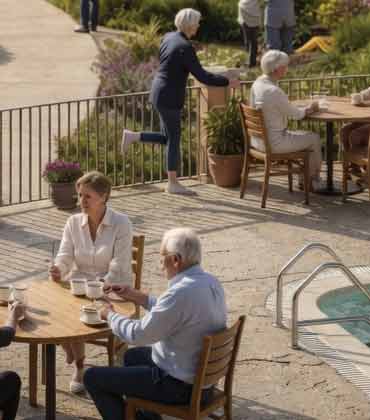
Redefining Comfort and Care with Senior Living Communities
Senior living communities are becoming holistic ecosystems of health, wellness, and social engagement, driven by demographic shifts, care innovation, and operational transformation.
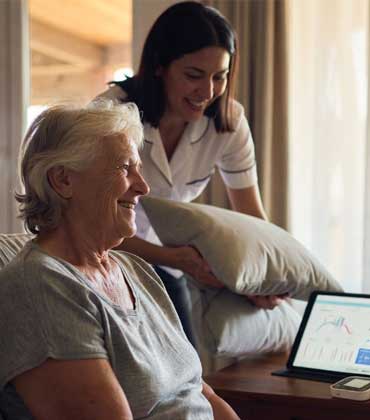
Senior Home Care Solutions: Redefining Aging with Personalized Support
Senior home care solutions provide personalized support, enhance independence, integrate technology, and address workforce challenges to deliver adaptable, high-quality care for aging populations.
EDITORIAL
Reimagining Elder Care Through Adaptive and Human-Centred Models
Across the industry, organizations are rethinking senior living, wellness and palliative support through a more individualized lens, balancing healthcare coordination with quality of life, continuity and human connection. This edition of Elder Care Review examines the leaders and care models shaping that transition.
Our cover story, The Newbury of Brookline, recognized as the Top Senior Living Community 2026, represents a senior living model built around responsiveness rather than routine. The community continuously adapts programming, dining, wellness and memory care around the evolving interests and preferences of its members. Individual members will change daily life, and the standard of hospitality and an empowered team make support not feel like a procedure.
This edition also highlights Personal Care at Evergreen, recognized as the Top Senior Home Care Solutions 2026, for its focused approach to recovery-oriented senior care. Operating smaller communities with low caregiver-to-resident ratios, the company has built a care environment centered on consistency, close clinical oversight and long-term staff stability. Its model allows residents to receive rehabilitative and day-to-day support within one setting, reducing disruption while giving families greater confidence during periods of medical uncertainty.
The leadership perspectives featured in this edition reinforce a broader industry shift toward person-centered care. John Mulder, Chief Medical Consultant for Hospice and Palliative Care at Holland Home, argues that palliative care should not be viewed solely through the lens of end-of-life treatment, but as a critical component of symptom management and quality-of-life support throughout serious illness. Gina Rice, Wellness Director at Kisco Senior Living, notes how crucial it is to build communities where the residents are included, empowered and engaged with programming based on what they want and need.
While elder care continues to evolve, the most meaningful shift is happening in how daily life is designed and lived. We invite our readers to explore the insights in this edition and examine how providers across senior living and wellness are building more adaptive and deeply human models of support.
